I keep hearing the same story.
And honestly, I see it more often with the women who come to train with me.
They are interested in learning. That part is obvious.
They take a class. They buy a firearm. Maybe they get their concealed carry permit. They fully intend to keep practicing.
And then life happens.
A year goes by.
Sometimes two.
Then they sign up for another class because they know they need a refresher.
And I want to be very clear about something: I am always glad they come back.
There is still interest there. There is still a desire to learn. They would not be spending the money or taking the time to come back if there wasn’t.
But too often, they are starting all over again.
Five Years Later… and Starting From Scratch
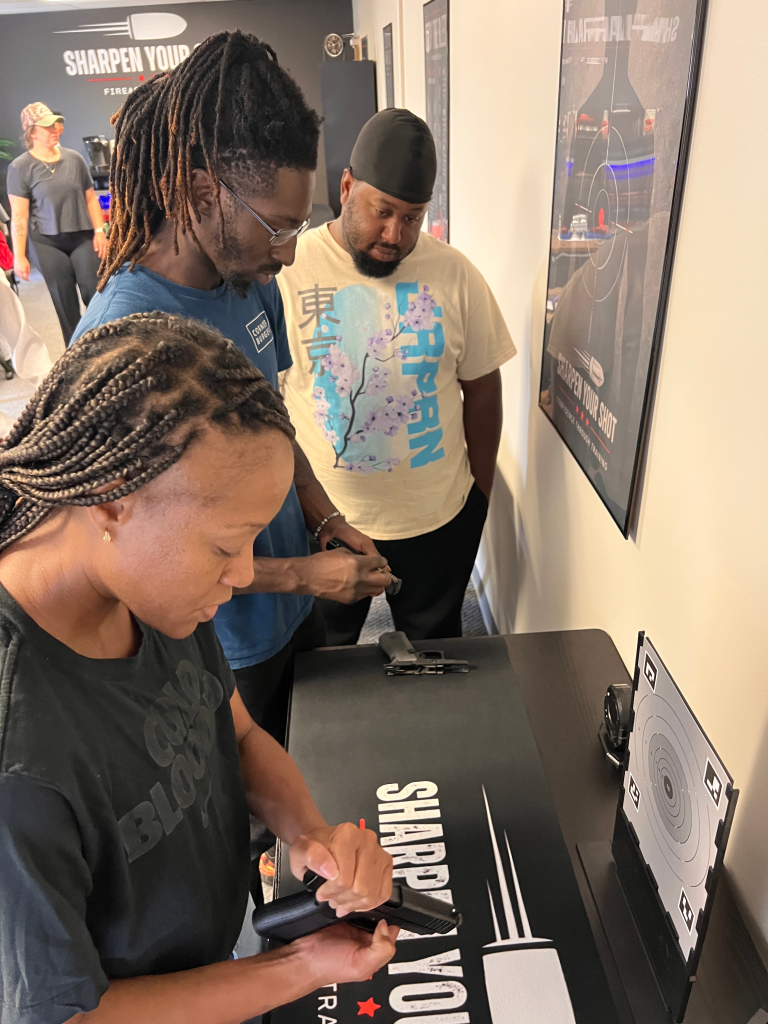
Recently, I worked one-on-one with a student who has had her concealed carry permit for five years.
In those five years, she had fired her gun one time.
She had taken another refresher course the year before coming to me, but when we started working together, she was basically starting from scratch.
Five years.
Multiple courses.
Money spent on training.
And she still did not feel comfortable with her firearm.
That really stuck with me.
Not because I thought badly of her. I didn’t.
It stuck with me because I see versions of this story all the time.
And it made me think about how important consistency is, especially when you are brand new.
One Class Is an Introduction
I think this is where people sometimes get the wrong idea about firearms training.
They take one class and think they should walk away knowing how to do everything.
But there is a lot to learn.
Safety.
Grip.
Stance.
Trigger control.
Sight alignment.
Loading and unloading.
Understanding how your firearm works.
Becoming comfortable handling it.
Learning what to do when something does not go exactly as planned.
That is a lot of information, especially when everything is new.
One class can give you a foundation.
It can introduce you to the fundamentals.
It can help you understand what you should be doing and why.
But one class does not automatically lock all of that in.
Repetition does.
You Have to Give Yourself Time to Learn
When someone is brand new, I can almost always tell whether they have been practicing between sessions.
I can see it the moment they pick up the firearm.
If they have to stop and think through where every finger goes, how to build the grip, or how their hands fit together, I usually know they have not been doing their homework. 😂
And I say that with love.
Because the good news is this:
It does not take as long as people think.
I have watched brand-new shooters make huge improvements in just a few days because they went home and practiced what we worked on.
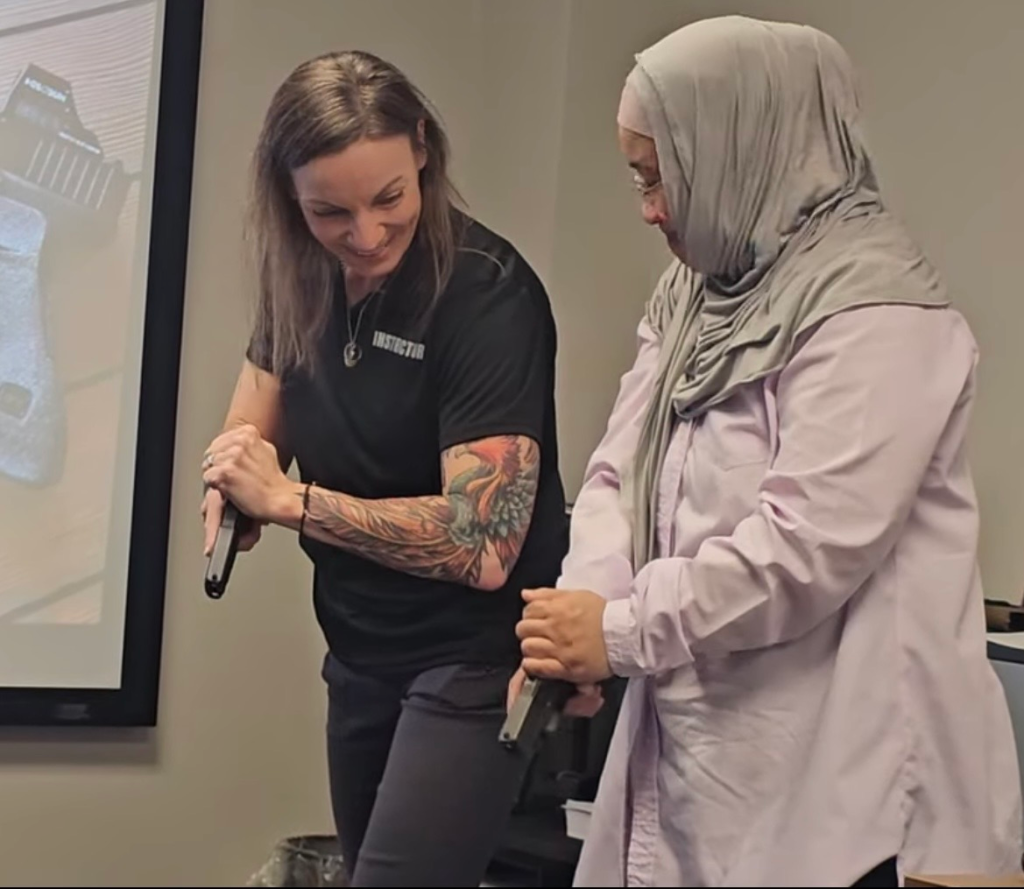
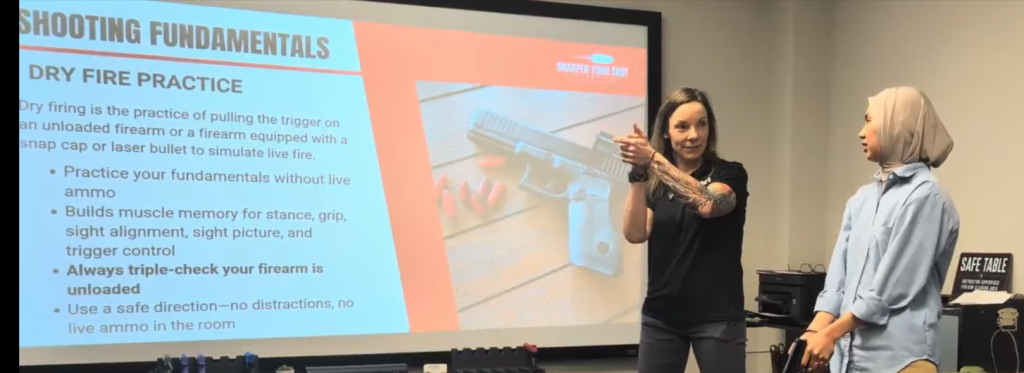
They safely dry fired.
They practiced building their grip.
They handled the firearm enough that it stopped feeling like a completely foreign object in their hands.
That is why I teach dry fire.
Not because it is exciting.
Trust me, I have already compared dry fire to eating your vegetables. 😂
You know it is good for you, but that does not always mean you want to do it.
But those repetitions matter.
A consistent grip is built through repetition.
A smooth trigger press is built through repetition.
A clean presentation is built through repetition.
And comfort with your firearm comes from actually handling your firearm.
Not from leaving it untouched for the next twelve months.
Consistency Does Not Mean You Have to Live at the Range
This is where I think people get overwhelmed.
They hear that they need to practice and immediately picture spending every weekend at the range and burning through hundreds of dollars in ammunition.
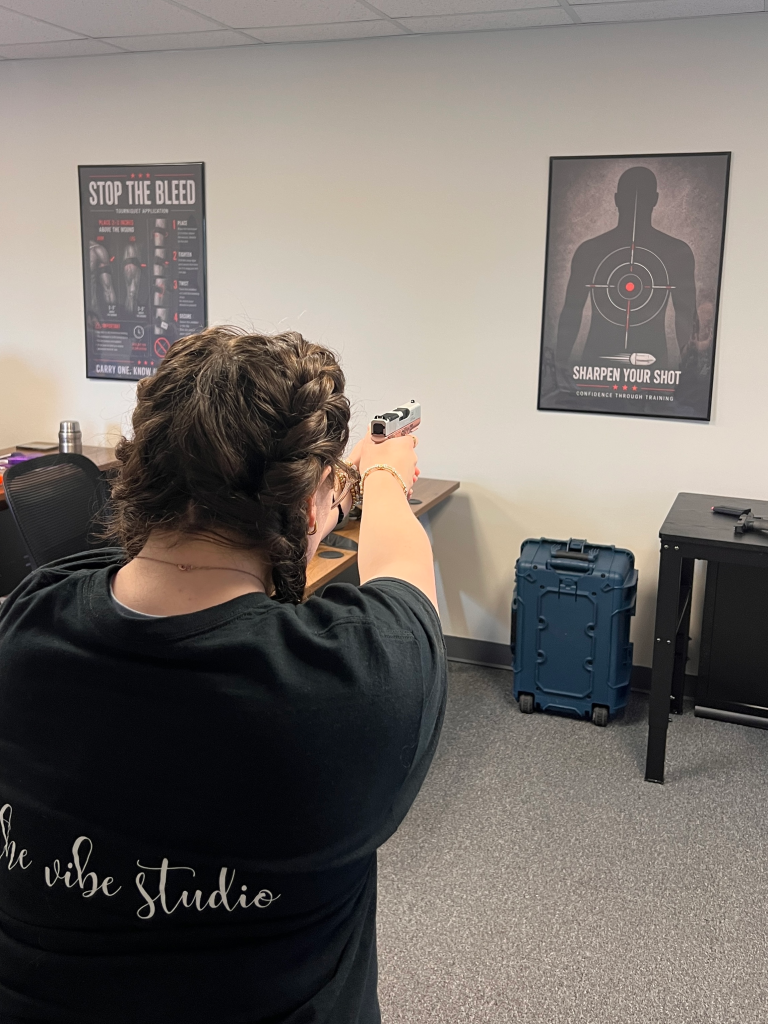
That is not what I mean.
You do not have to make firearms your entire personality.
You do not have to train every day for hours.
You do not have to become a competitive shooter.
But especially in the beginning, you do need to make some kind of commitment to yourself.
Maybe that means a few short, safe dry-fire sessions at home during the week.
Maybe it means scheduling your next range session before you leave your first one.
Maybe it means taking a few private lessons closer together instead of taking one lesson and waiting another year.
The exact plan will look different for everyone.
But there has to be a plan.
Because without one, it is very easy for a week to become a month.
A month becomes six months.
And suddenly you are standing in another class saying:
“I took a class a couple of years ago, but I don’t really remember anything.”
Confidence Comes From Doing
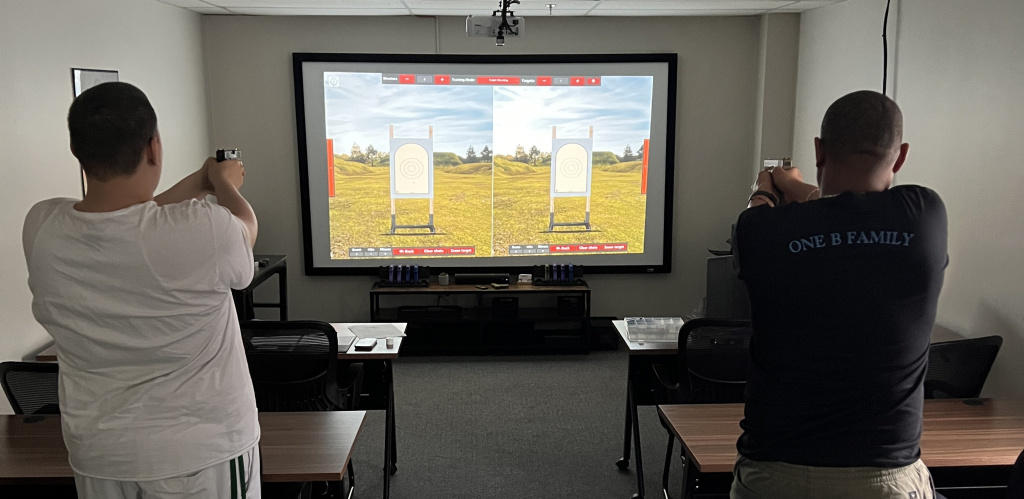
I think a lot of people wait until they feel more confident before they practice on their own.
But that is backwards.
Confidence is not something you wait around to feel.
Confidence is what consistent practice creates.
The more safely and correctly you handle your firearm, the less foreign it feels.
The more you repeat the fundamentals, the less you have to consciously think through every tiny step.
The more quality range time you get, the more familiar recoil, noise, and the entire shooting environment become.
You start trusting your grip.
You start recognizing what went wrong with a shot.
You start making corrections.
You stop feeling like every single thing requires enormous mental effort.
That is the other side people are trying to reach.
And I promise, it usually does not take as long as they think.
But you cannot get there by starting over once a year.
Maybe We Need to Think About Training Differently
The more students I work with, the more I believe we need to stop looking at firearms training as one isolated class.
Especially for a brand-new shooter.
Maybe your first step is a group class.
Maybe it is one-on-one coaching.
Maybe you need to start in a quiet classroom environment where you can learn the basics, safely handle the firearm, work through dry fire, ask questions, and build some comfort before ever stepping onto a live range.
Then we take it to the range.
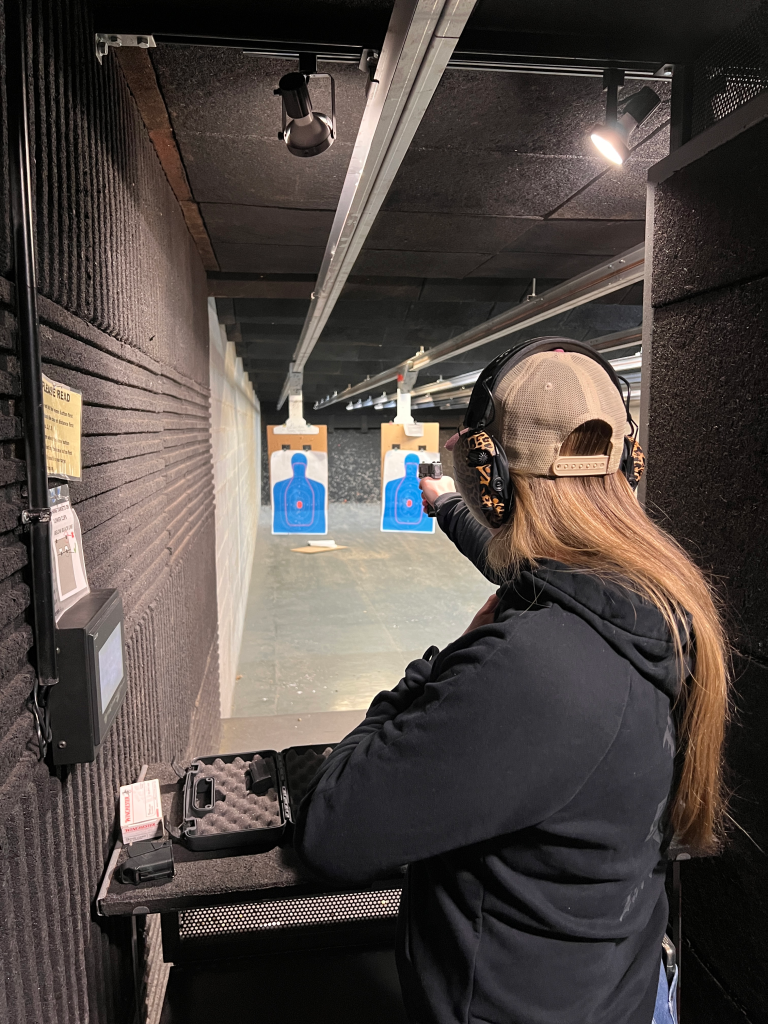
We work on applying those fundamentals under live fire.
Maybe one range session is enough to get you moving in the right direction.
Maybe you need three.
Maybe you need more.
Every person is different.
There is no magic number of lessons that suddenly makes someone comfortable and competent.
And honestly, I think that is another place where people get discouraged.
They think, “I already took a class. Why am I not good at this yet?”
Because you are learning a skill.
You would never take one piano lesson and wonder why you cannot play a song.
You would never go to the gym once and wonder why you are not stronger.
Firearms are no different.
Start. Build. Maintain.
This is the training path I want more new shooters to understand.
Start.
Learn the safety rules. Learn how your firearm works. Learn the fundamentals. Get comfortable handling it.
Build.
Practice. Dry fire. Get quality live-fire sessions in. Work with an instructor when you need help. Correct problems before they become deeply ingrained habits.
Maintain.
Once those fundamentals are truly established, you are no longer constantly rebuilding from zero.
Yes, skills can get rusty.
Yes, you still need to practice.
But there is a huge difference between brushing the rust off a skill you genuinely learned and completely relearning everything because it never had time to stick in the first place.
Do Not Be Embarrassed to Come Back
And let me say this to the person reading this who already recognizes themself in this article:
Come back.
Seriously.
Maybe it has been two years since your last class.
Maybe you have owned your firearm for five years and still do not feel comfortable with it.
Maybe you have forgotten how to load it, build your grip, or take it apart.
That is okay.
Come back.
We will start where you are.
And this time?
Let’s keep going.
But I am also going to challenge you.
This time, do not disappear again.
Make the commitment to yourself that this time you are going to follow through.
Not perfectly.
Not obsessively.
Just consistently.
Because if owning a firearm and being able to use it safely and confidently is important to you, then you have to invest more than the cost of one class.
You have to invest some time.
Some energy.
Some repetition.
And honestly?
You might be surprised how quickly you get to the other side.
You just have to stop starting over.
Ready to Stop Starting Over?
Whether you are brand new, coming back after a long break, or realizing that one class was not enough to make everything stick, you do not have to figure it out alone.
Start with the kind of training that makes sense for where you are right now.
Maybe that is a group class.
Maybe it is a private classroom session where we slow things down, work on safe firearm handling, fundamentals, and dry fire.
Maybe you are ready to take those skills to the range with one-on-one live-fire coaching.
Wherever you are starting, the goal is the same:
Build the foundation. Practice consistently. Get comfortable. And stop having to start over.