Why preparedness starts long before you ever need it.
How many times have you heard someone say, “I never thought something like that could happen here”?
It’s something we hear after tragedies. Whether it’s a violent crime, a home invasion, or a shooting in a community where people have always felt safe, the reaction is often the same.
Shock. Disbelief. And the realization that something they never imagined could happen has just happened.
Recently, a tragic school shooting in Bend, Oregon, brought that reality home to an entire community.
According to a November 16 article published by USA Carry, local law enforcement reported a significant increase in interest in concealed carry training following the shooting at Silver Rail Elementary School. Approximately 45 residents attended a concealed carry course hosted by the Deschutes County Sheriff’s Office.
During the shooting, a parent with a concealed carry permit intervened and fatally shot the attacker.
The tragedy prompted different responses throughout the community. While some residents sought firearms training, others participated in an event where firearms were surrendered to be repurposed into garden tools.
People were responding to the same tragedy in different ways, but many were reconsidering what personal safety meant to them.
And it raises an important question.
Why do we so often wait until something happens before we decide to prepare?
Personal safety training is something we often think about doing someday. We recognize its importance, but it’s easy to push it aside when life gets busy.
Until something happens that makes us wish we’d started sooner.
The Things We Never Think Will Happen
Most of us go about our daily lives without expecting something terrible to happen. And that’s a good thing. Nobody should have to live in constant fear.
But there’s a difference between living without fear and believing we’re somehow immune to danger.
We tell ourselves we live in a safe neighborhood. We don’t go looking for trouble. We’re careful.
And we assume that’s enough.
Until something happens that challenges that belief.
It’s easy to think about preparedness in terms of what might happen to someone else. We see tragedies on the news, hear about accidents, or read stories about people who suddenly found themselves in dangerous situations.
We feel terrible for those involved. Maybe we even think about what we would have done.
But eventually, life goes back to normal, and the urgency fades.
I understand that mindset more than most people might realize.
Because I prepared for something I never imagined would happen to me.
Until it did.
I Never Thought I’d Be the One Who Needed Help
As a firearms instructor, I’ve always taken safety seriously. Working around firearms carries inherent risks, and I recognized that I had a responsibility not only for my own safety but also for the safety of my students.
That’s one of the reasons I pursued emergency medical training, including Stop the Bleed.
I wanted to know what to do if someone suffered a serious injury or gunshot wound.
I felt that as an instructor, I should have the knowledge and skills to respond if someone got hurt.
I already carried a medical kit in my range bag, but after completing that training, I made an important addition.
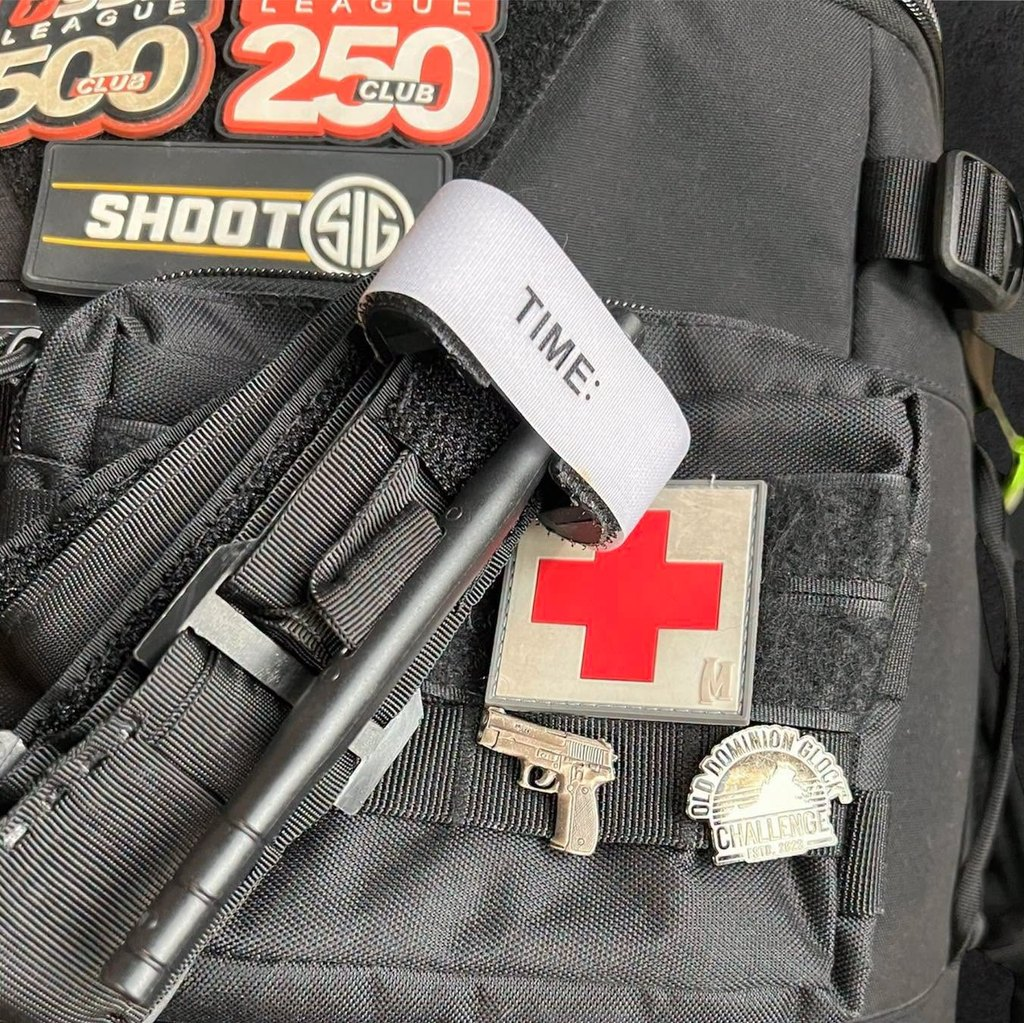
A tourniquet.
And I didn’t just toss it into my bag and forget about it.
I was intentional about where I placed it, securing it to the outside of my range bag so it would be easily accessible in an emergency.
I mentally walked through scenarios of how I might need to use it. I thought about what could go wrong and what I would do if it did.
I wasn’t expecting something terrible to happen. I simply recognized that it could.
What I never imagined was that I would be the person who needed that tourniquet.
On March 25, 2026, I was injured in a negligent discharge at a shooting range.
I remember staring at my wound, trying to make sense of what I was seeing. It felt like an eternity before my mind could fully process that this was actually happening.
I had been shot.
And my first thought was my tourniquet.
I knew exactly where it was because I had deliberately placed it somewhere easily accessible.
I directed someone to retrieve it from my range bag, and I had it in my hand before anyone else reached me.
Someone eventually applied a tourniquet to my leg. I later learned that the people helping me had their own trauma bag, so I don’t know whether mine was the one they used.
But what matters to me isn’t which tourniquet was used.
It’s that when something happened that I never imagined would happen to me, I knew what needed to happen next.
I believe the training I’d taken, the scenarios I’d thought through, and the steps I’d taken to prepare helped me remain calmer during those first critical moments.
That preparation didn’t prevent what happened. And it certainly didn’t make the experience easy.
But I wasn’t starting from scratch.
I couldn’t control what had just happened to me. But my preparation helped me respond to it.
That’s something I want people to understand.
Being prepared doesn’t mean nothing bad will ever happen. It doesn’t guarantee an outcome.
It means you’ve taken steps beforehand to give yourself a better chance of responding when something unexpected happens.
Personal Safety Training Is About More Than Carrying a Firearm
When people hear the words “personal safety,” they often think immediately about firearms or self-defense.
And while those can be part of the conversation, preparedness involves much more.
It’s situational awareness. It’s understanding your surroundings and recognizing potential problems before they escalate.
It’s knowing how to avoid dangerous situations whenever possible.
It’s understanding the law, your responsibilities, and the consequences of using force.
It’s having the knowledge and confidence to make informed decisions under pressure.
And sometimes, it’s knowing how to provide emergency assistance when something goes wrong.
My experience changed how I approach safety education.
Of course, I still teach the four fundamental rules of firearm safety. Those rules are essential, and they always will be.
But I also spend time talking about emergency medical preparedness.
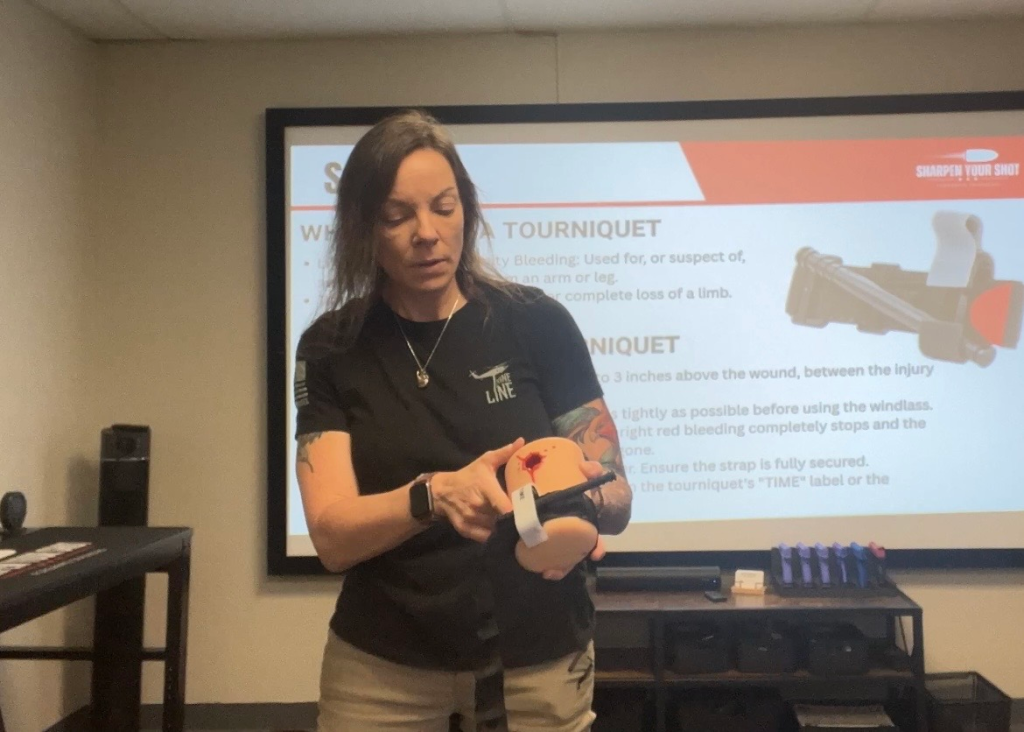
I encourage my students to carry a tourniquet in their range bags and even consider keeping one in their vehicles.
More importantly, I encourage them to learn how to use one properly.
Because in an emergency involving life-threatening bleeding, having the right equipment and knowing how to use it could save a life.
There’s another part of preparedness I now emphasize in my classes that people don’t always think about.
The aftermath.
We spend so much time thinking about what we would do during a dangerous encounter, but what happens afterward?
An incident can happen in seconds, yet the consequences can last months, years, or even a lifetime.
There may be medical expenses, lost income, an inability to return to work, legal proceedings, and emotional or psychological consequences.
Even when someone survives, their life may look very different afterward.
I know that firsthand.
That’s why I want my students to understand that personal safety isn’t simply about having the ability to defend themselves. It’s about understanding the responsibilities, risks, and potential consequences that come with their decisions.
Owning a firearm doesn’t automatically make someone prepared. Neither does getting a concealed carry permit.
Training is a starting point, not a finish line.
“I’ll Do It After the Holidays”
As an instructor, I hear it all the time.
“I’ve been meaning to take a class.”
“I really want to learn more about personal safety.”
“I’ll sign up after the holidays.”
And I understand. Life gets busy. There are family obligations, work schedules, holiday plans, and always something else competing for our time and money.
But here’s what I wish more people would consider.
Danger doesn’t wait until after the holidays. It doesn’t check your calendar or show up when it’s convenient.
If you’ve already been thinking about taking a concealed carry class or learning more about personal safety, there’s probably a reason that interest is there.
Maybe you want to feel more confident when you’re out alone.
Maybe you’ve been considering carrying a firearm but aren’t sure where to begin.
Maybe you’ve had an experience that made you realize how vulnerable you could be.
Or maybe you simply want to know that you have the knowledge and skills to better protect yourself and the people you care about.
Whatever your reason, why keep putting it off?
We tend to schedule training around our lives, assuming we’ll always have another opportunity to get around to it.
And most of the time, we do.
But none of us knows what tomorrow might bring.
Think about the people in Bend, Oregon. Before that tragedy, how many residents thought something like that could happen in their community?
How many had considered taking a concealed carry class but hadn’t gotten around to it?
Now, following an unimaginable tragedy, people are taking steps to become more informed and prepared.
It’s a natural reaction. When something happens close to home, it changes how we think about our own safety.
But why does it so often take something happening before we act?
You don’t get to choose when something unexpected happens. But you can choose to prepare for it.
And that preparation doesn’t have to happen all at once.
It can begin with a class, a conversation, learning a new skill, or simply becoming more aware of your surroundings.
The important thing is taking that first step.
Prepared, Not Paranoid
I don’t teach firearms and personal safety because I believe everyone should be afraid of the world around them.
I teach because I believe people deserve to feel confident, capable, and informed about their own safety.
You don’t need to spend your days imagining every terrible thing that might happen.
You don’t need to live in fear.
But you also don’t have to wait until something happens to recognize the value of being prepared.
The community in Bend, Oregon, never expected to experience such a tragedy.
And I never imagined I’d be shot at the range where I worked.
I had prepared for a gunshot wound because I knew it was a possibility in my line of work.
But I never thought I’d be the one who needed that preparation.
Until I did.
That experience reinforced something I believe strongly.
Preparedness isn’t about controlling what happens to you. It’s about taking responsibility for what you can control before something happens.
We can’t predict every dangerous situation, prevent every accident, or control the actions of others.
But we can educate ourselves.
We can develop skills.
We can practice.
And we can make the decision to be proactive rather than reactive.
If you’ve been thinking about taking that first step toward better personal safety, don’t keep putting it off.
Don’t wait for something to happen before you decide your safety matters.
Be proactive. Be prepared. Not paranoid.
Take the First Step Toward Being Prepared
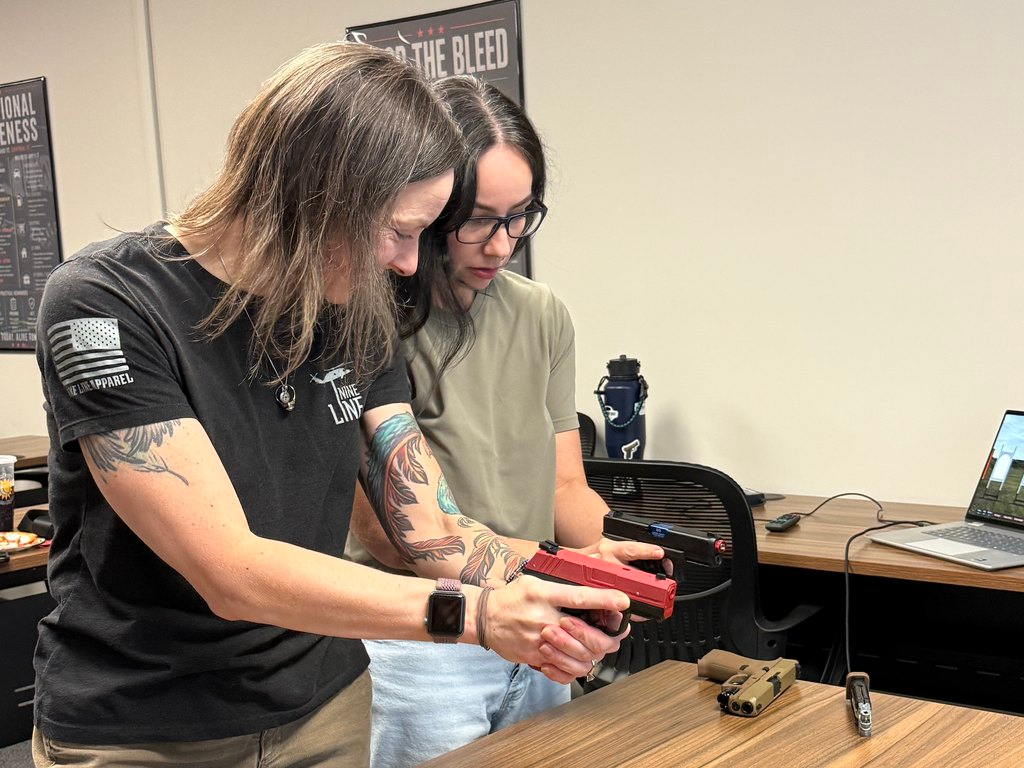
At Sharpen Your Shot, my goal is to help individuals develop the knowledge, skills, and confidence to make informed decisions about their personal safety.
Whether you’re new to firearms, considering obtaining your concealed carry permit, or simply looking to become more confident and capable, personal safety training is where it begins.
I offer Virginia Concealed Carry classes, Women’s Pistol Training & Personal Safety, and private instruction in Central Virginia.
Don’t wait until something happens to take ownership of your personal safety.
Related Reading: USA Carry: A Month After the Silver Rail School Shooting, Bend Splits Between Carry Classes and Turning Guns Into Garden Tools