“What gun should I buy for concealed carry?”
It is one of the most common questions I’m asked, and the honest answer is not as simple as naming a particular brand or model.
A firearm is personal. What works well for your friend, spouse, instructor, or favorite person on YouTube may not work well for you.
Before you start comparing calibers or looking at the smallest gun in the display case, there is another question you need to answer first:
How are you actually going to carry it?
Start With Your Carry Method
The firearm and the way you carry it need to work together.
Are you planning to carry inside the waistband? In a belly band? In a concealed-carry bag? In a purse? Outside the waistband under a jacket?
Your answer can affect the size of the firearm you choose.
Someone carrying inside the waistband may need a slimmer firearm that works with their body, clothing, and daily activities. Someone carrying in a properly designed concealed-carry purse or bag may be able to comfortably carry a slightly larger firearm.
That can be a good thing. A larger firearm often provides more gripping surface, may be easier to control, and can be more enjoyable to practice with.
This does not mean you should choose the largest gun that fits inside your purse. It means you do not automatically have to choose the smallest gun available simply because you want to carry concealed.
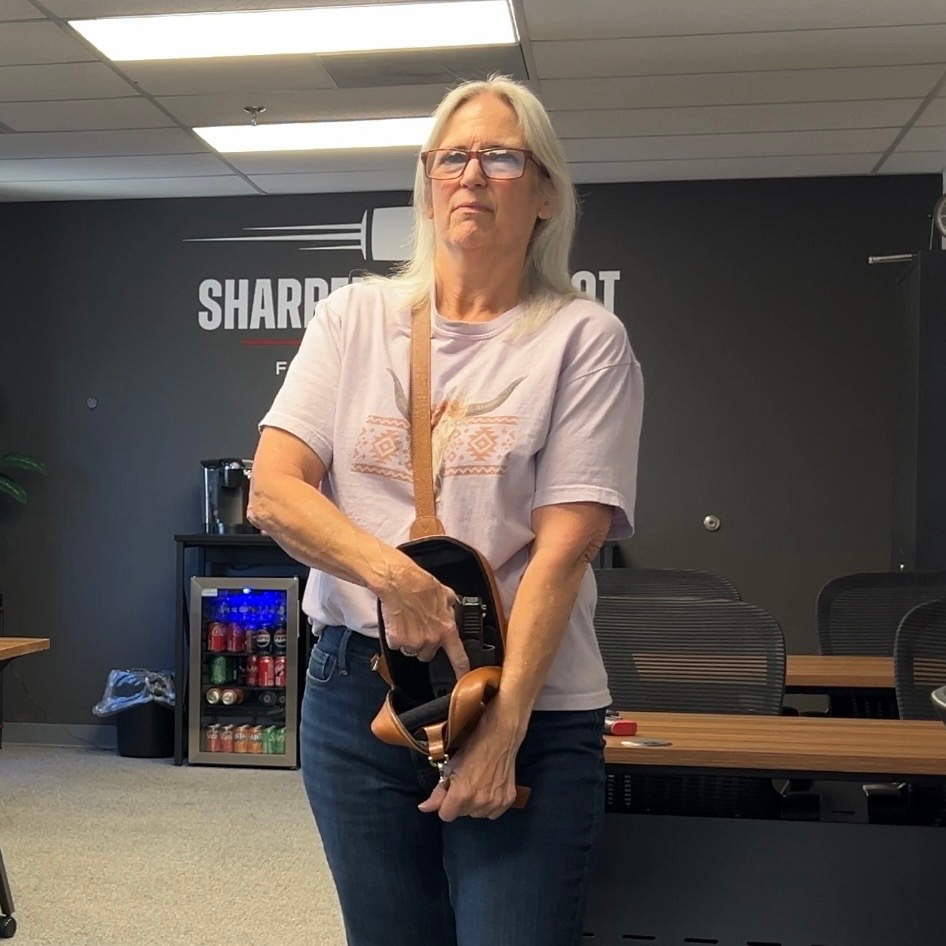
Your carry method should allow the firearm to remain:
- Properly secured in a holster
- Protected from objects entering the trigger guard
- Concealed
- Accessible to you
- Under your control at all times
When carrying in a purse or bag, the firearm should be in a dedicated compartment and secured in a holster designed for that method of carry. Your keys, lipstick, loose change, and firearm should not all be attending the same purse party.
Smaller Does Not Always Mean Easier
Many first-time buyers assume a smaller firearm will be easier to shoot.
That is not always the case.
Small handguns are easier to conceal, but they can also be harder to grip, harder to control, and less forgiving of mistakes in your fundamentals. With less weight and less surface area to hold onto, the recoil may feel sharper than it does in a larger firearm of the same caliber.
I learned this with my own first concealed-carry firearm. I chose something small because I thought it would be easy to conceal. It was. But it was also too small for me to grip well, which made it more difficult to shoot.
The gun accomplished the concealment part. It did not accomplish the part where I needed to feel comfortable and confident practicing with it.
That is why I encourage people to find the balance between concealability and shootability.
A firearm that disappears under your clothing but that you hate shooting is probably not going to encourage consistent training or save your life.
Pay Attention to How the Firearm Fits Your Hand
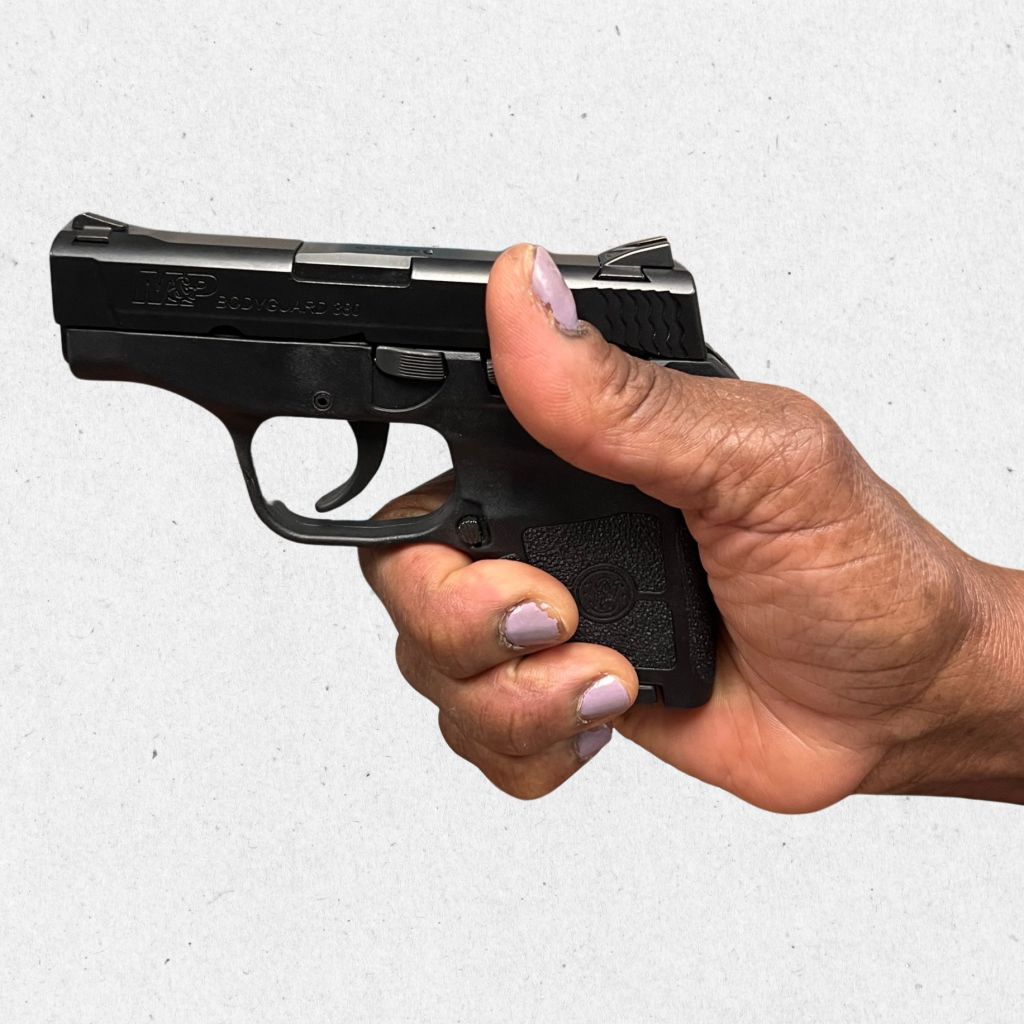
When you hold a firearm, look beyond whether it simply feels “comfortable.”
Can you get a complete grip?
Can you reach the trigger properly without shifting your hand around the grip?
Can you operate the magazine release and other controls?
Can you rack the slide safely and consistently?
Can you lock the slide open and clear a malfunction?
Some of these skills become easier with good technique, so do not immediately assume you are incapable of operating a particular firearm. I have worked with plenty of students who thought they were not strong enough to rack a slide. Once we adjusted their technique, they were able to do it.
However, technique cannot fix a firearm that is simply a poor fit for your hands.
The grip should give you enough room to establish control, and you should be able to reach the trigger without stretching or twisting your hand into an awkward position.
Try Before You Buy
You would not let someone else choose your shoes based only on what fits their feet. A firearm should not be any different.
In my women’s classes, I put it a little more bluntly:
Would you let your husband or boyfriend pick out your bra for you?
Probably not.
So why would you let someone else decide which firearm fits your hands, body, experience level, and carry method?
Recommendations can give you a place to begin, but they should not make the final decision for you.
Whenever possible, visit a range that rents firearms and try several options. Compare different sizes, grip shapes, trigger reaches, and operating systems.
Do not judge a firearm after firing only one or two rounds. Give yourself enough time to establish a proper grip and see how it feels through multiple shots.
Working with an instructor during this process can also help. A good instructor should not simply hand you their favorite gun and tell you to buy it. They should help you evaluate what works for you.
Choosing a Caliber
Caliber matters, but it should not be the only factor in your decision.
Two of the most common options for concealed carry are .380 ACP and 9mm.
.380 ACP
A .380 can be a perfectly reasonable concealed-carry choice. It is available in many small, lightweight firearms that are easy to conceal.
Depending on the firearm, however, a very small .380 may still feel snappy. Do not assume that a smaller caliber will automatically produce a softer or easier shooting experience. The size and weight of the firearm also affect how the recoil feels.
9mm
The 9mm is extremely common and is available in everything from small concealed-carry pistols to larger compact and full-size firearms.
Because it is so widely used, 9mm ammunition is generally available in many varieties and is often more economical for regular practice than less-common defensive calibers.
That matters because the cost of ammunition can affect how often you train.
The best choice is the caliber you can control well, shoot accurately, carry consistently, and afford to practice with regularly.
The better question is:
Which firearm and caliber combination can you safely operate, shoot accurately, carry consistently, and afford to practice with regularly?
A caliber does not help you if the firearm is too difficult for you to control or if you avoid practicing with it.
Know How Your Firearm Works
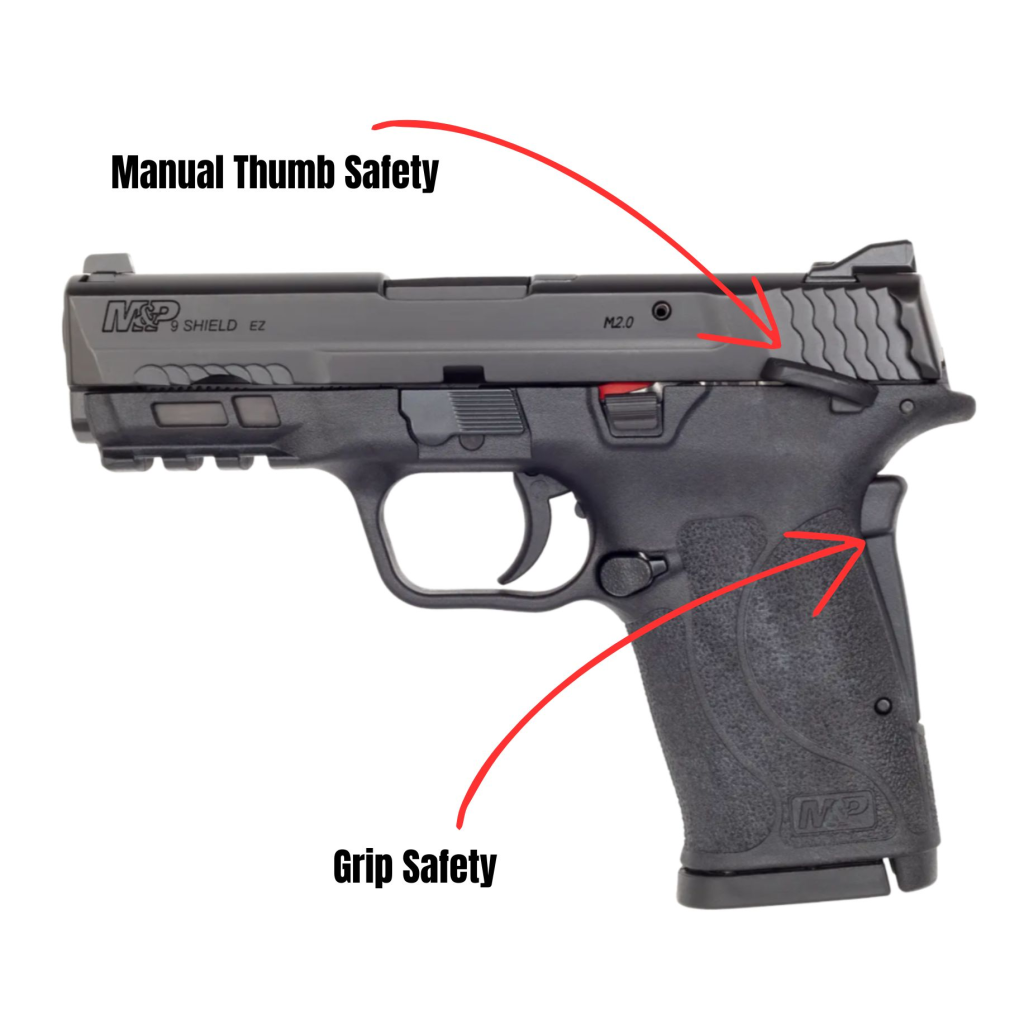
Firearms can have different combinations of internal and external safety features.
Some have a manual thumb safety. Some do not. Others may include grip safeties, trigger safety mechanisms, heavier trigger pulls, or different operating systems.
There is not one correct answer for everyone.
A manual safety may make one person feel more comfortable. Another person may prefer a simpler system without an additional control to disengage.
Whatever you choose, you need to understand exactly how your firearm operates. You should be able to safely load it, unload it, verify its condition, clear it, and operate every control without guessing.
A mechanical safety does not replace safe handling, a quality holster, or proper training.
Budget for More Than the Firearm
The cost of concealed carry does not end when you purchase the gun.
You may also need:
- A quality holster or concealed-carry bag
- A sturdy belt
- Defensive ammunition
- Practice ammunition
- Eye and ear protection
- Cleaning supplies
- Training
- Secure storage
- Dry-fire training equipment
Try not to spend your entire budget on the firearm and then settle for the cheapest holster you can find.
Your holster or carry system is part of your safety equipment. It should securely retain the firearm, protect the trigger guard, and work with your body and chosen carry position.
Practice With the Way You Plan to Carry
Shooting accurately at the range is only one piece of concealed carry.
You also need to learn how to safely access the firearm from your actual carry method.
Drawing from a waistband holster is different from accessing a firearm from a belly band or concealed-carry bag. Each method requires specific practice.
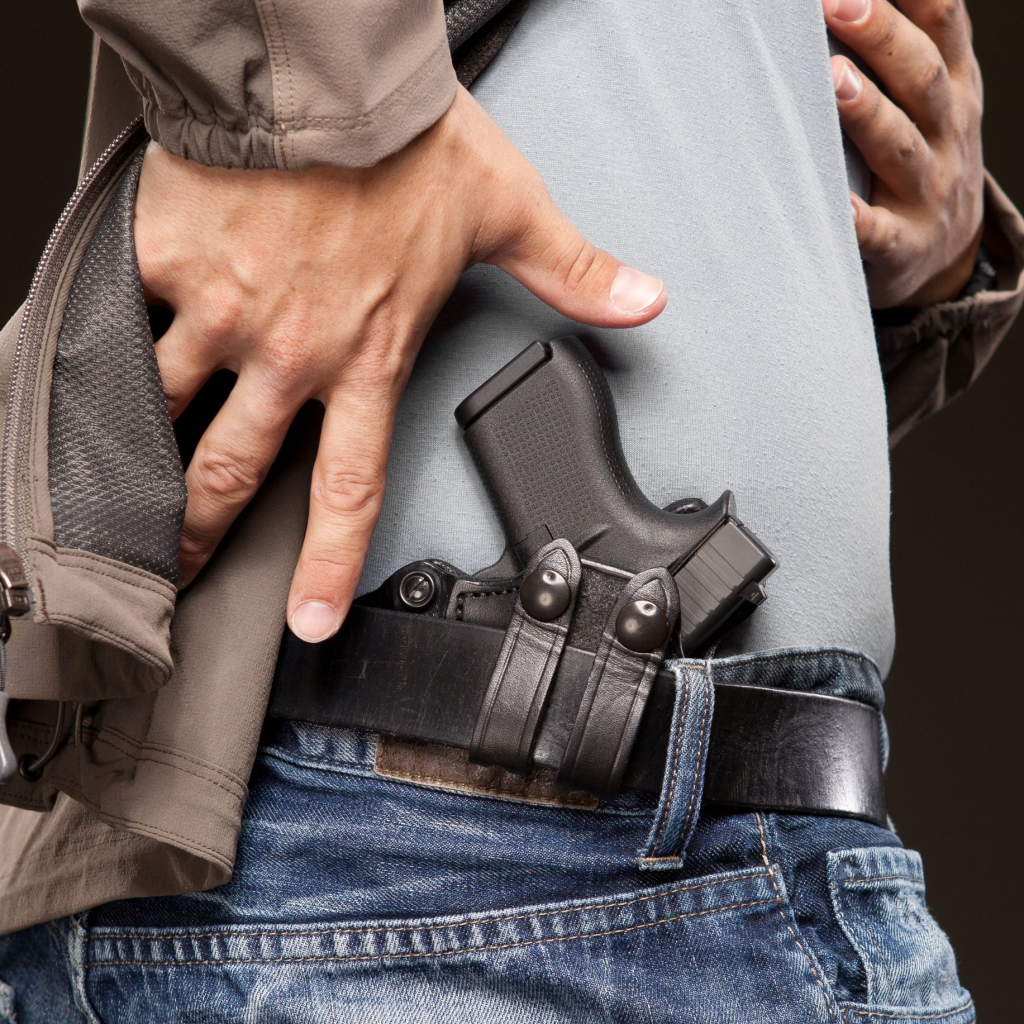
Begin slowly with an unloaded firearm in a safe training environment. Work on clearing clothing, establishing your grip, accessing the firearm, and returning it to the holster without rushing.
Dry fire will help you develop these skills without using live ammunition, but it must still be treated seriously. Verify that the firearm is unloaded, remove live ammunition from the training area, choose a safe direction, and follow all firearm safety rules.
Laser training systems can also provide helpful feedback while you practice trigger control, sight alignment, and presentations from a ready position.
These are the dry-fire and laser-training systems I use in my classes and private coaching: Strikeman
Owning the equipment is not the same as knowing how to use it. Training tools work best when you use them consistently and with a purpose.
Do Not Expect the First Gun to Be Your Forever Gun
You may do all the research, rent several firearms, and still discover that your needs change after you begin carrying.
That does not mean you made a terrible decision.
Your preferences may change as your skills improve. You may discover that you can comfortably conceal a larger firearm than you originally thought. You may change your carry position, wardrobe, work environment, or daily routine.
Your first firearm teaches you a lot about what you do and do not want.
Take your time. Ask questions. Try different options. Most importantly, choose a firearm you are willing to train with, not simply one that is easy to hide.
The right concealed-carry firearm is not necessarily the smallest one, the most popular one, or the one someone behind the gun counter insists you need.
It is the one that fits your hands, works with the way you plan to carry, and that you can operate safely and confidently.
And once you choose it, train with it. Because owning the firearm is only the beginning. The training behind it is what makes the difference.
Visit my GEAR section for a list of concealed carry products and training tools that I use and recommend.
This post may contain affiliate links. If you purchase through one of these links, I may earn a small commission at no additional cost to you. I only recommend products I personally use, trust, or believe may be helpful to my students.