
There are certain sounds I hear over and over when I’m teaching newer shooters.
The click of a trigger during dry fire.
The slide locking back.
A magazine hitting the floor.
And, occasionally, an F-bomb when someone is trying to rack a stubborn slide.
Actually, lately there have been enough of those that I finally added a swear jar to the classroom. 😂
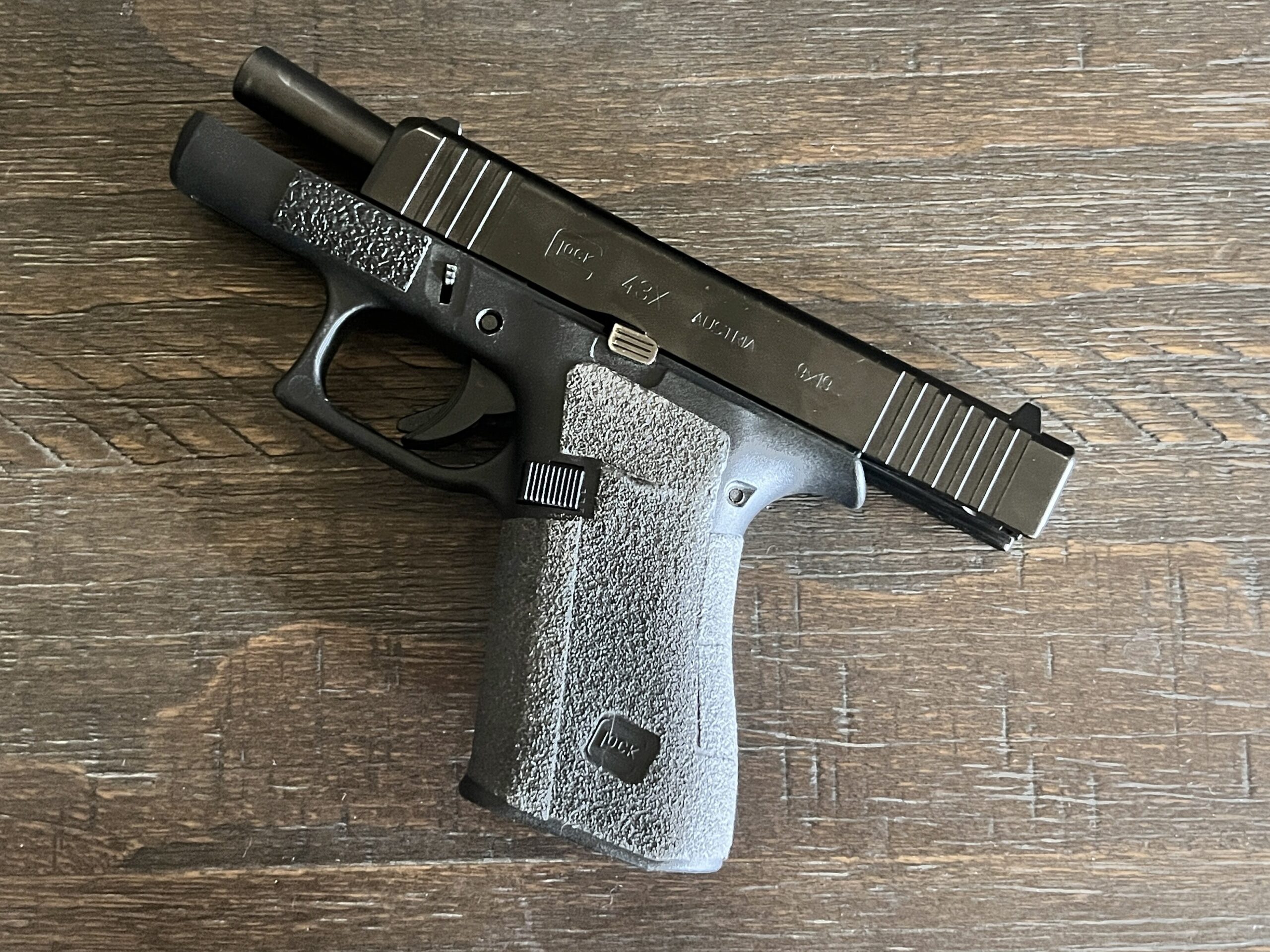
Racking the slide is one of the most common things I see students struggle with, especially when they’re brand new to firearms.
And I understand why it gets frustrating.
You grab the slide. You pull. Nothing happens.
You adjust your grip.
Try again.
Maybe the slide moves halfway.
Now you’re squeezing harder, your hands are getting tired, and you’re starting to wonder whether you bought the wrong gun or simply aren’t strong enough to operate it.
Before you decide either of those things, there’s something I want you to know:
Racking a slide is not just about hand strength.
Technique matters. Body mechanics matter. Familiarity matters.
And yes, grip strength matters too.
But very often, what looks like a strength problem is really a technique problem.
And before you go shopping for a different gun, let’s fix the technique first.
Stop Trying to Pull the Slide Back
This is probably the biggest change I make with students.
When people first learn to rack a slide, they tend to hold the gun out in front of themselves and try to pull the slide backward with one hand.
Basically, one arm is doing all the work.
Instead, I teach a push-pull motion.
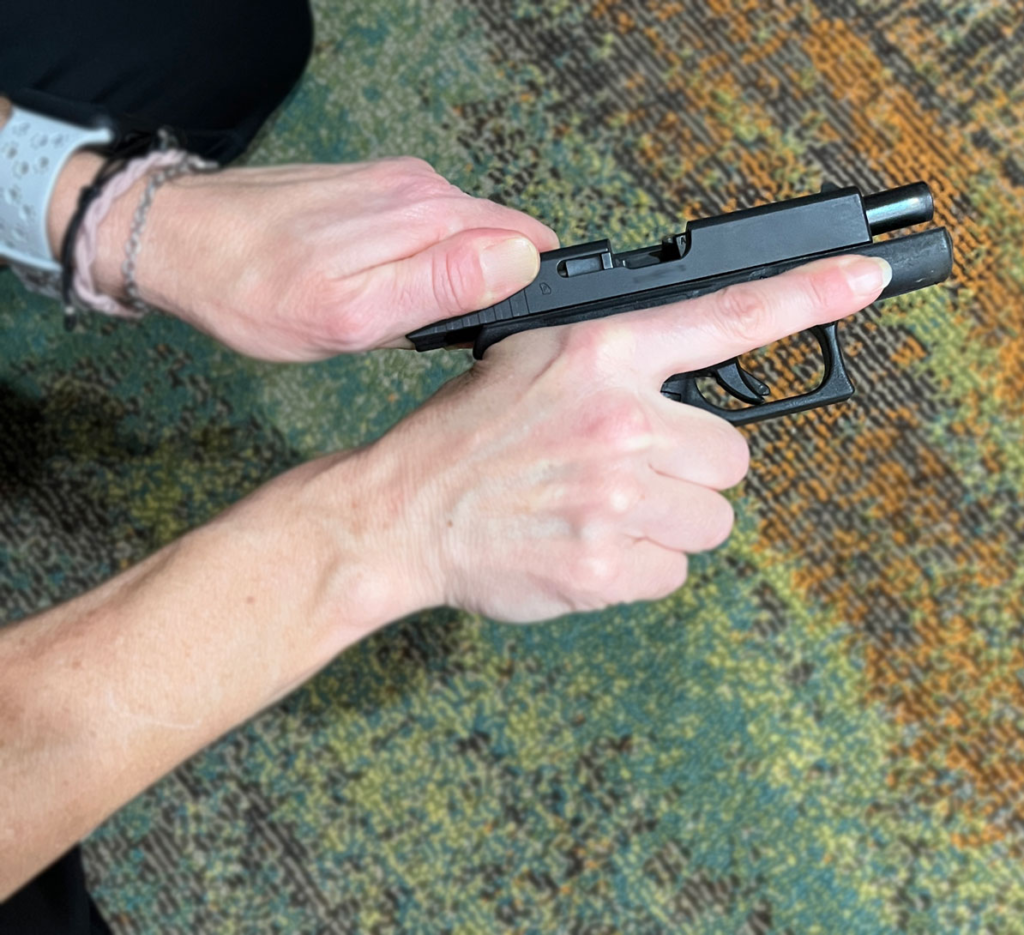
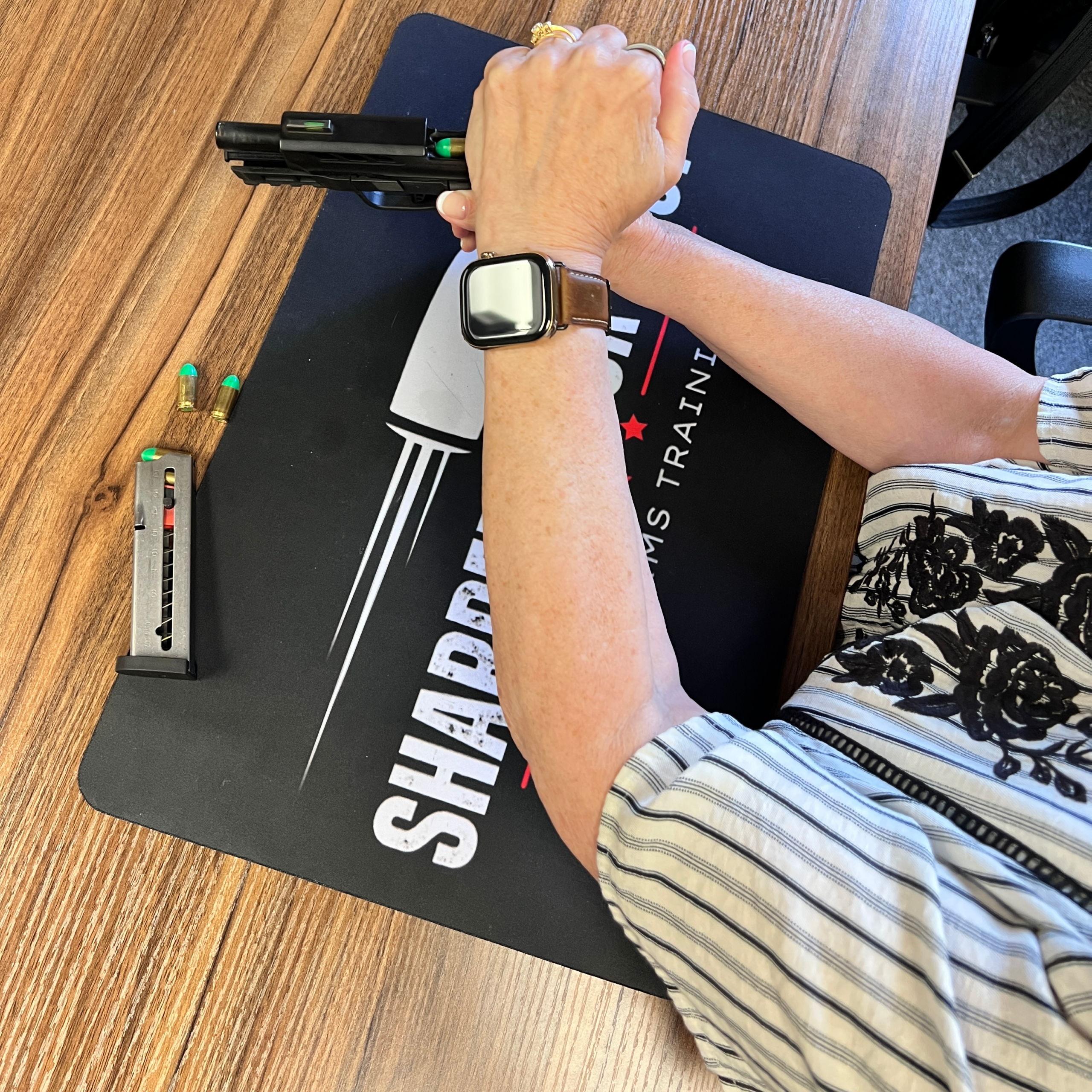
Get a solid grip on the firearm with your dominant hand. With your other hand, get as much contact with the slide as you comfortably can.
Then use both arms.
As one hand pulls the slide toward you, push the firearm forward with the other.
And honestly, that pushing hand is doing most of the work.
You’re no longer asking one hand and forearm to overpower the recoil spring.
You’re using much more of your body.
For a lot of my students, that one adjustment changes everything.
I’ve watched someone struggle with a slide repeatedly, change their technique, and suddenly rack it like they’ve been doing it forever.
And usually I get some version of:
“Ohhhh.”
Yep.
That’s the moment. 😂
Get the Gun Closer to Your Body
Another mistake I see is trying to manipulate the firearm with the arms completely extended.
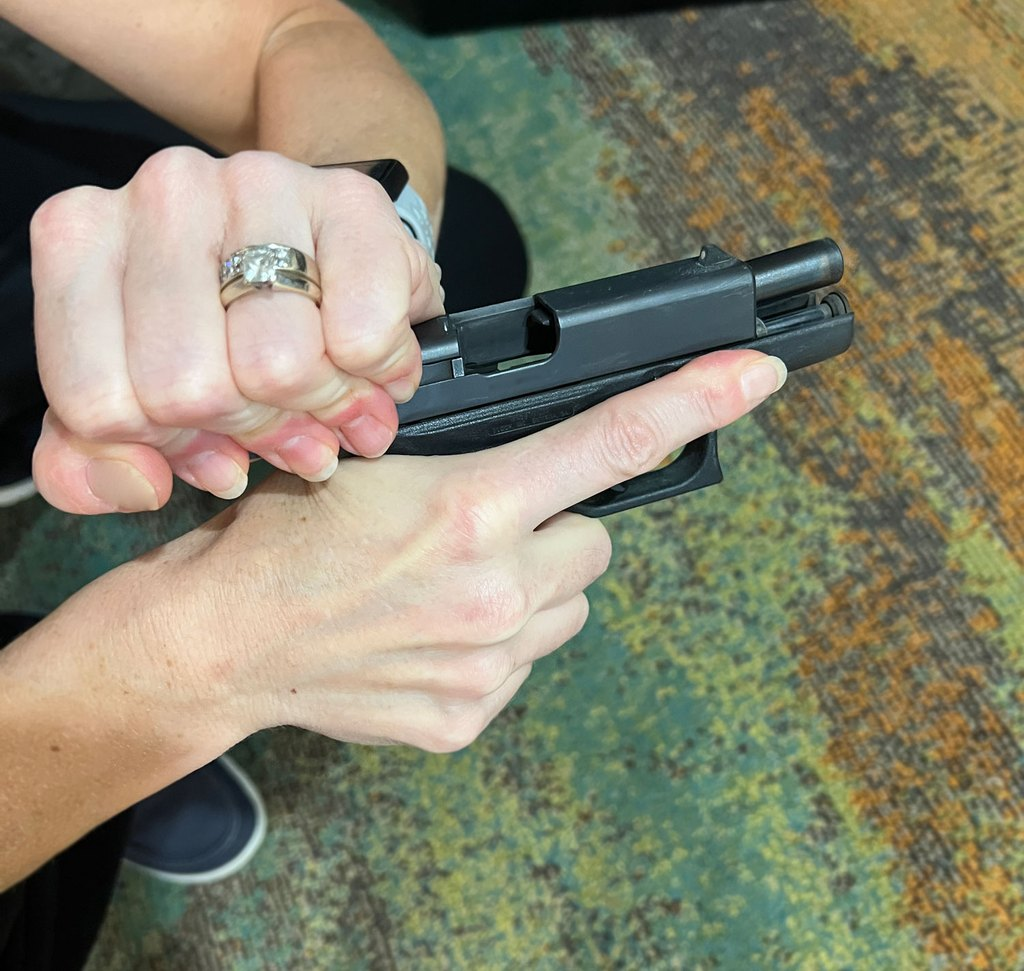
Bring the firearm closer to your body where you have more leverage and better control.
You can also slightly rotate your upper body and allow your larger muscle groups to help you.
Small changes in positioning can make a surprisingly big difference.
This is one of the reasons hands-on training matters so much.
Sometimes I can watch someone struggle for five seconds and immediately see what’s making the task harder than it needs to be.
A tiny adjustment to hand position, elbow position, or body mechanics can completely change the result.
Get a good grip on the slide and pinch.
Bring the firearm closer to your body.
Most of the force comes from your dominant hand pushing forward. Your support hand grips the slide and pulls toward you.
But Grip Strength DOES Matter
Technique can solve a lot.
But I’m also not going to pretend strength doesn’t matter.
It absolutely does.
Grip strength affects much more than your ability to rack a slide.
It helps you establish a better grip on the firearm, manage recoil, manipulate controls, clear malfunctions and maintain control of the gun.
The good news?
Grip strength can be trained.
And you don’t need to turn your life into an elaborate strength-training program to improve it.
One of the easiest things you can do is keep a grip trainer somewhere you’ll actually use it.
At your desk.
Beside the couch.
In your car.
At work.
Pick it up for a few minutes at a time and use it consistently.
The important part is consistency.
Five minutes here and there over a few weeks is going to do far more for you than destroying your forearms once and forgetting about it for the next month.
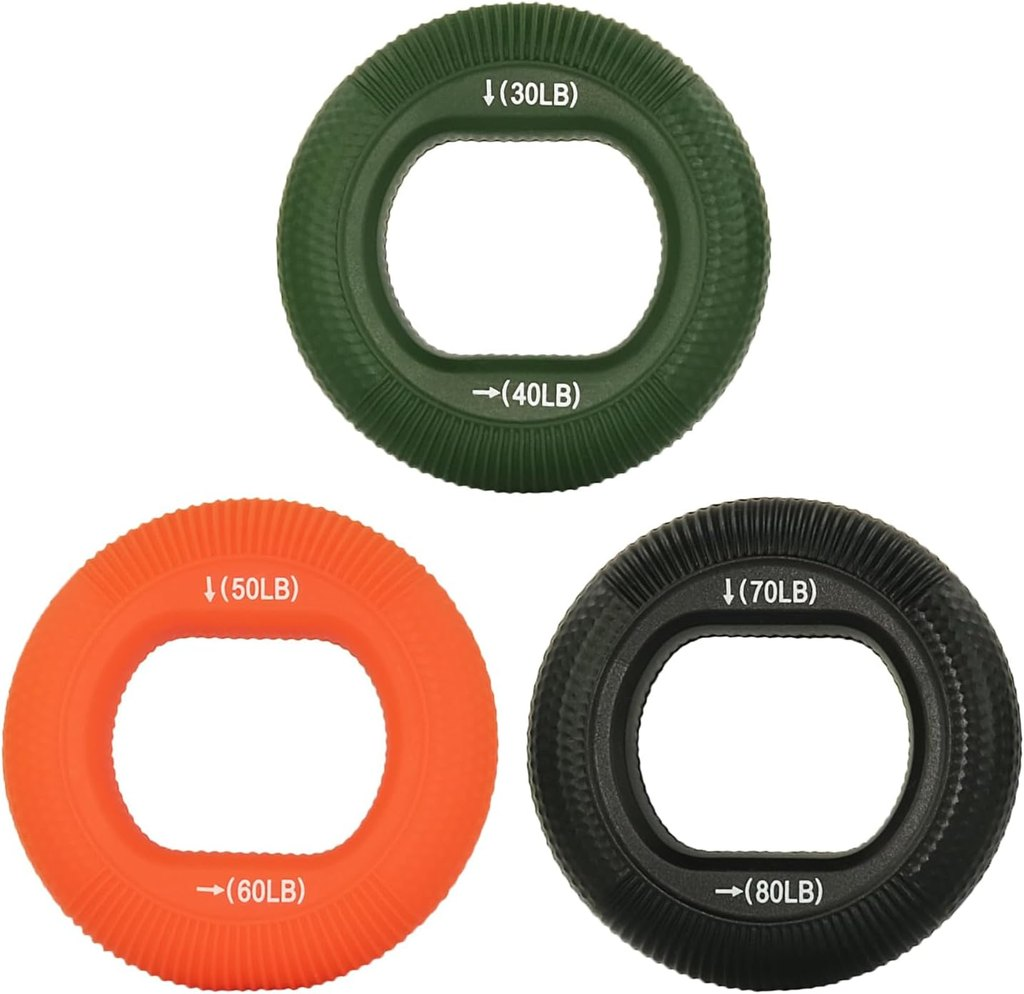
Rubber Grip Strength Trainer 30-80 lbs.
Your Firearm Can Be Part of the Training Too
One of the best ways to become better at manipulating your firearm is pretty simple:
Manipulate your firearm.
Not only when you’re standing on a shooting range.
At home, with a properly unloaded firearm and a safe dry-fire setup, you can work on the skills that actually make you more competent with your gun.
Practice racking the slide.
Practice locking it open.
Practice releasing it.
Practice inserting and removing the magazine.
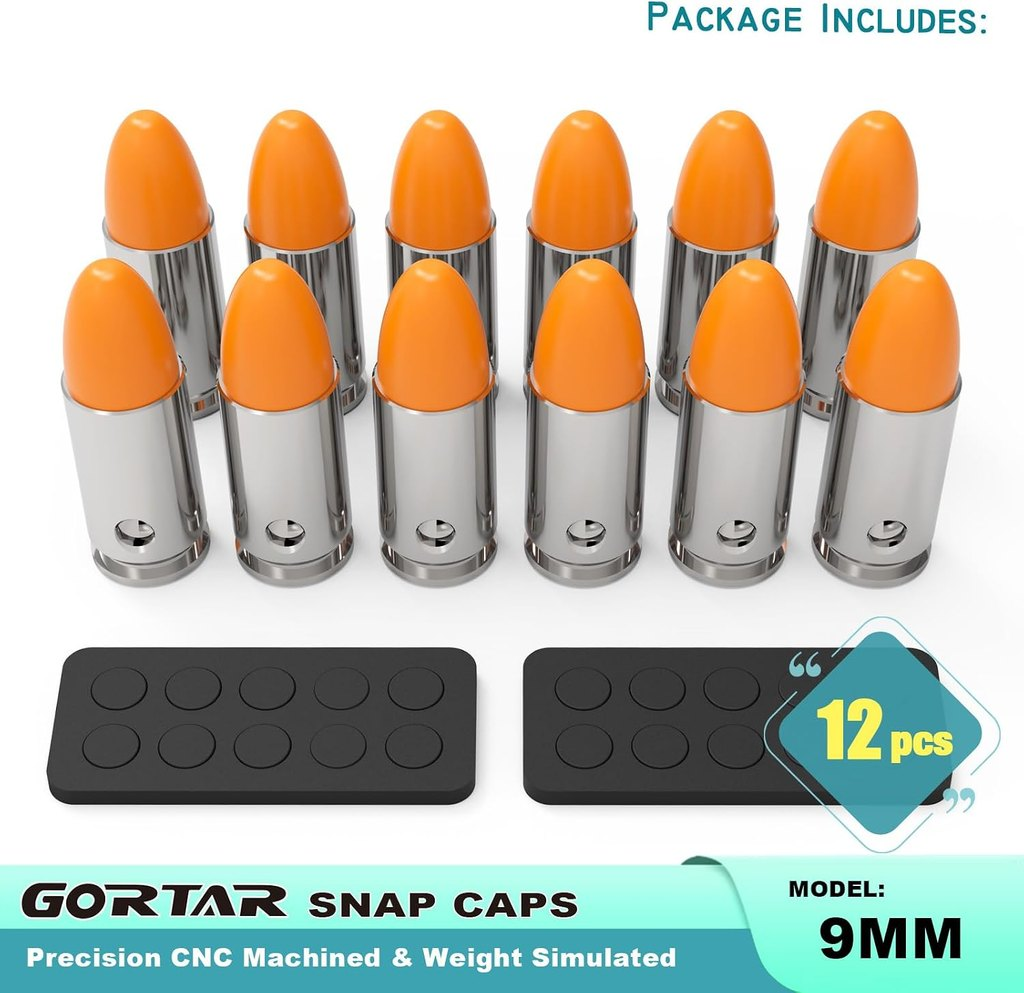
Practice loading and unloading with dummy rounds if appropriate for your training setup.
Practice your grip.
Practice acquiring your sights.
These aren’t glamorous drills.
But this is firearms training.
In fact, some of the most productive training sessions I teach don’t involve firing a single live round.
We manipulate the guns over and over.
We load.
Unload.
Clear.
Rack.
Lock.
Release.
Repeat.
Because repetition builds familiarity.
And familiarity matters when you need your hands to know what to do without stopping to think through every single step.
Training Dummy Rounds
I like these for practicing loading, unloading, and other firearm manipulations without using live ammunition. The added weight also makes them feel more realistic than lightweight snap caps, which I really like for dry fire training.
Don’t Practice Until Your Hands Are Exhausted
More isn’t always better.
If you’re practicing your slide manipulation and your hands start getting tired, stop.
When you’re exhausted, technique tends to fall apart.
Then you start compensating.
Then you’re practicing the wrong movement.
I’d rather see someone practice good technique for a few minutes several times a week than wrestle with their firearm for 30 minutes once a month.
This is exactly why I talk so much about consistency in firearms training.
You don’t need one massive training session.
You need reps.
What About “Easy Rack” Guns?
There are firearms specifically designed to require less force to manipulate the slide, and for some shooters they are an excellent option.
There is absolutely nothing wrong with choosing one.
But I don’t automatically assume someone needs an easier-to-rack firearm simply because they’re struggling the first time they try.
I want to see them manipulate several firearms.
I want to look at their technique.
I want to see how the gun fits their hands.
I want to know whether they can comfortably reach and operate the controls.
I want to see what happens after we’ve worked together for a while.
Because buying a firearm based solely on whether you can easily rack the slide in a gun store can eliminate a lot of options that might otherwise work very well for you.
The gun should fit you.
And that means considering the entire firearm, not one single manipulation.
Sometimes the Problem Is the Gun
There is another possibility.
Sometimes a particular firearm really is harder for a person to manipulate.
Different firearms have different recoil spring weights, slide serrations, slide shapes and overall ergonomics.
Your hand size matters.
Your grip matters.
Your strength matters.
Injuries and mobility limitations matter.
That’s why I’m such a big believer in trying firearms before buying whenever possible.
The gun your husband loves may not work for you.
The gun your friend swears by may feel terrible in your hands.
The gun some guy behind a counter says you “need” may be completely wrong for you.
And the tiny gun that looks easiest to carry isn’t automatically going to be the easiest gun to shoot or manipulate.
Fit matters.
Confidence Comes After Competence
This might be the biggest thing I’ve learned from teaching.
People often tell me they want to feel more confident with their firearm.
I understand that.
But I’m not really trying to teach confidence.
I’m trying to teach competence.
We work through the skill.
We figure out why something isn’t working.
We make an adjustment.
We repeat it.
You do it successfully once.
Then again.
Then ten more times.
And somewhere along the way, confidence shows up on its own.
I’ve seen it happen over and over with students.
Something that felt intimidating at the beginning of class becomes completely routine a few hours later.
Not because I gave them a pep talk.
Because they learned how to do it.
There is a huge difference.
And If the F-Bombs Keep Coming…
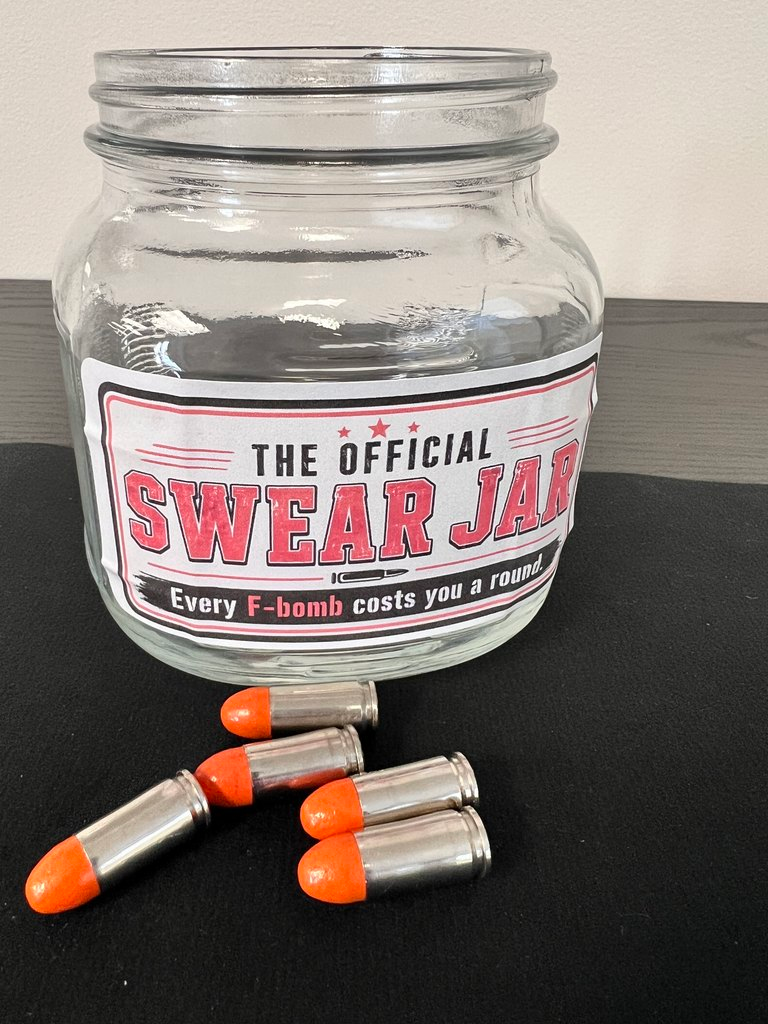
That’s okay too.
We’ll work on your technique.
We’ll build your grip strength.
We’ll practice.
We’ll figure out whether the firearm is actually a good fit for you.
And eventually you’ll probably rack that same slide without even thinking about it.
The swear jar, however, has apparently made a permanent home in the classroom.
At this rate, it might pay the studio rent.
Want Some Help With Your Firearm?
If you’re struggling to rack the slide, load or unload your firearm, clear it safely, or simply don’t feel comfortable handling the gun you already own, that’s exactly the kind of thing we can work on during a private training session.
You do not need to wait until you’re “better” before coming to training.
That’s what training is for.
We can slow everything down, figure out what’s causing the problem and build the skill one repetition at a time.