“If you do not expect the unexpected, you will not recognize it when it arrives.”
I use that quote in my classes all the time.
We talk about scenarios. We talk about situational awareness. We talk about thinking through the what ifs before you ever find yourself standing in the middle of one.
Not because I want my students walking around afraid of everything that could possibly happen.
Quite the opposite.
I want them prepared.
Because when something unexpected happens and fear enters the equation, that is not the ideal time for your brain to be trying to create a plan from scratch.
Think about what happens when you suddenly find yourself in a threatening situation you’ve never experienced or even considered before.
Your brain is trying to understand what is happening while fear and panic are entering the picture at the same time. There is no previous experience or mental plan to pull from. And when the brain doesn’t know what to do next, the body can respond by shutting down.
That’s where the freeze response can come in.
It doesn’t mean someone is weak or incapable. Sometimes the brain simply doesn’t have a plan to work with.
And recently I realized something about this lesson that I had never really put together before.
I’ve lived both sides of it.
When My Brain Didn’t Have a Plan
When I was in my 30s, I worked at a rental car agency.
One day, I found myself inside a rental car with a customer I had never met before. He was a complete stranger, and it became very clear that he had bad intentions.
I won’t get into every detail here because that’s not really the point of this story.
What matters is that I knew I was in danger.
And I had no plan.
I had never experienced anything like it. I hadn’t mentally prepared for anything remotely similar to this situation. Fear and panic took over before my brain could figure out what to do next.
And when my brain didn’t know what to do next, my body didn’t either.
I froze.
For a long time, I was hard on myself about that response.
Today, I understand it differently.
Freezing isn’t necessarily about being weak, incapable or unwilling to protect yourself. Under stress, our brains and bodies can react in ways we never expected.
That’s one of the reasons I spend so much time with students talking through scenarios before they happen.
Years later, I experienced the other side.
When My Brain Had Something to Work With
Before I was ever injured at a shooting range, I had spent time thinking about medical emergencies.
I’ve written before about why I carried a tourniquet and believed in preparing for the “what if.”
I carried a medical kit on the outside of my range bag for a very specific reason.
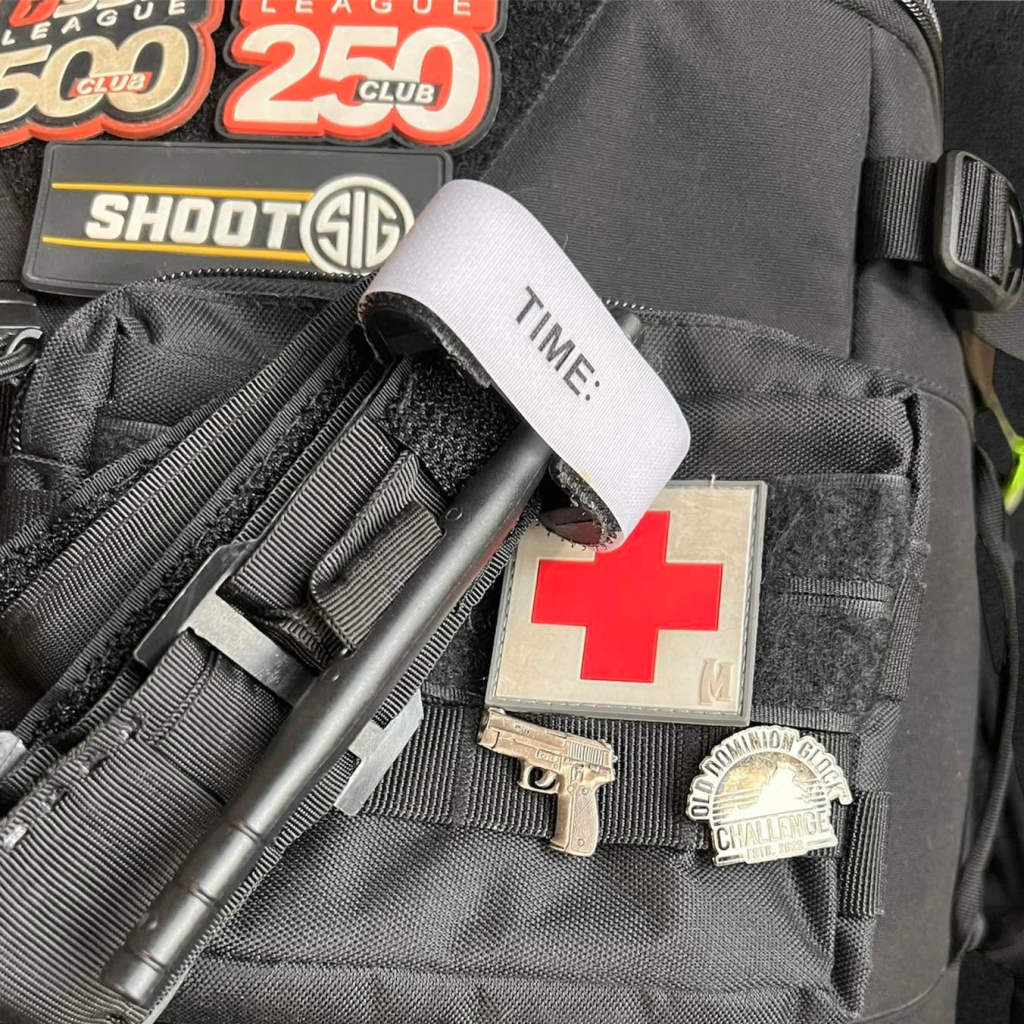
I had mentally prepared for a situation where someone else was injured and I was tending to them. If I couldn’t reach my range bag, I wanted to be able to tell another person exactly where the tourniquet was so they could hand it to me.
That was the scenario I had prepared for.
I had never considered that I would be the person who was shot.
But when that happened, my brain wasn’t starting from zero.
The moment I realized I had been shot, my very first thought was my tourniquet.
I knew where it was.
I knew what needed to happen.
I was able to tell him exactly where to find it, and he handed it to me before anyone else was even on the scene.
That part of the plan worked almost exactly the way I had prepared for it to work.
The only thing I had never imagined was that I would be the one who needed it.
And despite what had just happened, I stayed remarkably calm.
The situation was nothing like the one I had pictured in my head.
But enough of it was familiar that my brain had something to pull from.
It had something to work with.
And that realization changed the way I think about something I’ve been teaching for years.
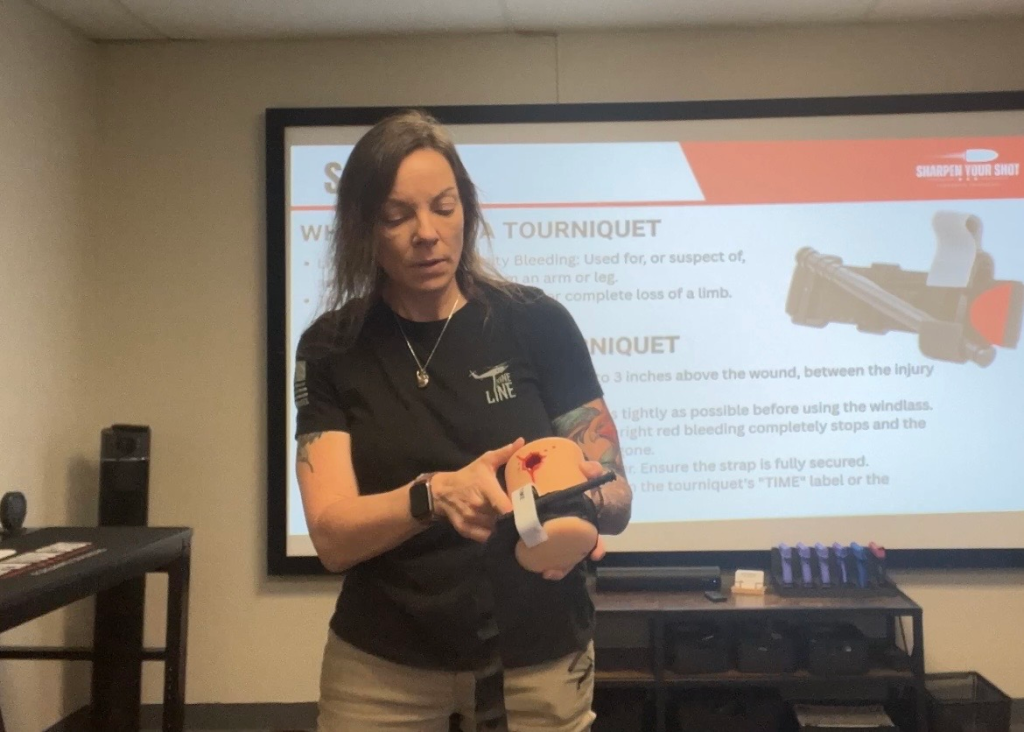
If you carry medical equipment, knowing how to use it matters just as much as having it. STOP THE BLEED provides training and resources for recognizing and responding to life-threatening bleeding.
You Can’t Predict Every Scenario
Mental preparedness doesn’t mean you need to imagine every bad thing that could possibly happen.
That’s impossible.
You can’t create a script for every parking lot, every gas station, every stranger, every malfunction, every medical emergency or every defensive encounter.
And thinking through scenarios certainly doesn’t guarantee that you’ll respond perfectly when something happens.
Fear is still fear.
Stress can affect your thinking, your vision, your hearing, your movement and your ability to make decisions.
But having considered situations ahead of time may give your brain something familiar to reach for when everything around you suddenly feels unfamiliar.
That’s the point.
Preparedness isn’t about predicting exactly what will happen. It’s about giving your brain a starting point when something unexpected does happen.
That’s Why We Talk Through the “What Ifs”
When I give students scenarios in class, sometimes they sound incredibly specific.
You’re walking through a parking lot and someone approaches you. What are you paying attention to?
You’re holding your child’s hand. Which hand are you using?
Someone grabs your dominant hand. Now what?
You’re carrying a defensive tool. Can you actually access it from the position you’re in?
You’re sitting inside your vehicle when something starts happening outside of it. What’s your first move?
You carry medical equipment. If you are the person injured, does someone else know where it is?
I’m not looking for one perfect answer.
I’m trying to get the brain involved before fear ever enters the conversation.
Every scenario gives you another mental reference point.
Maybe the situation you eventually encounter looks nothing like the one we discussed in class.
That’s okay.
You may still recognize a piece of it.
And sometimes one familiar piece is enough to help the brain begin figuring out what comes next.
I’ve Been Both People
This is the part I understand differently now.
I’ve been the person whose brain had no plan and whose body froze.
I’ve also been the person who suddenly found herself in an unimaginable situation but had something familiar for my brain to pull from.
Both people were me.
Same person.
Same capability.
Very different circumstances.
And that has made this part of my teaching much more personal.
I can’t promise anyone that thinking through scenarios means you’ll never freeze.
I can’t promise that training makes fear disappear.
It doesn’t.
What I can tell you is that I would rather give my brain as many useful reference points as possible before I need them.
Because the worst possible moment to start thinking about what you would do is the moment you desperately need to do something.
So we’ll keep talking through scenarios in my classes.
We’ll think about the parking lots.
We’ll think about the vehicles.
We’ll think about the dominant hand.
We’ll think about where our equipment is.
We’ll think about the things most people would rather assume will never happen.
Not because I want my students living in fear.
I want them living prepared.
Thanks so much Katie for all this information, it is SOOO valuable. I hate what happened to you but something great is blooming from it. I for one appreciate the expansion of the classes and can’t wait for the next one I’m signed up for!
Thank you so much. ❤️ That really means a lot to me. I hate what happened too, but I’m grateful I can use what I learned from it to make my classes better. And I’m excited to have you back for more training! ❤️
Comments are closed.